




-


-


-


Online Message


Recrystallization or Emulsion Breakdown: What Actually Damages Ice Cream When Temperature Rises?
2026-11-01
Share to:


What Happens When Temperature Rises in Transit?
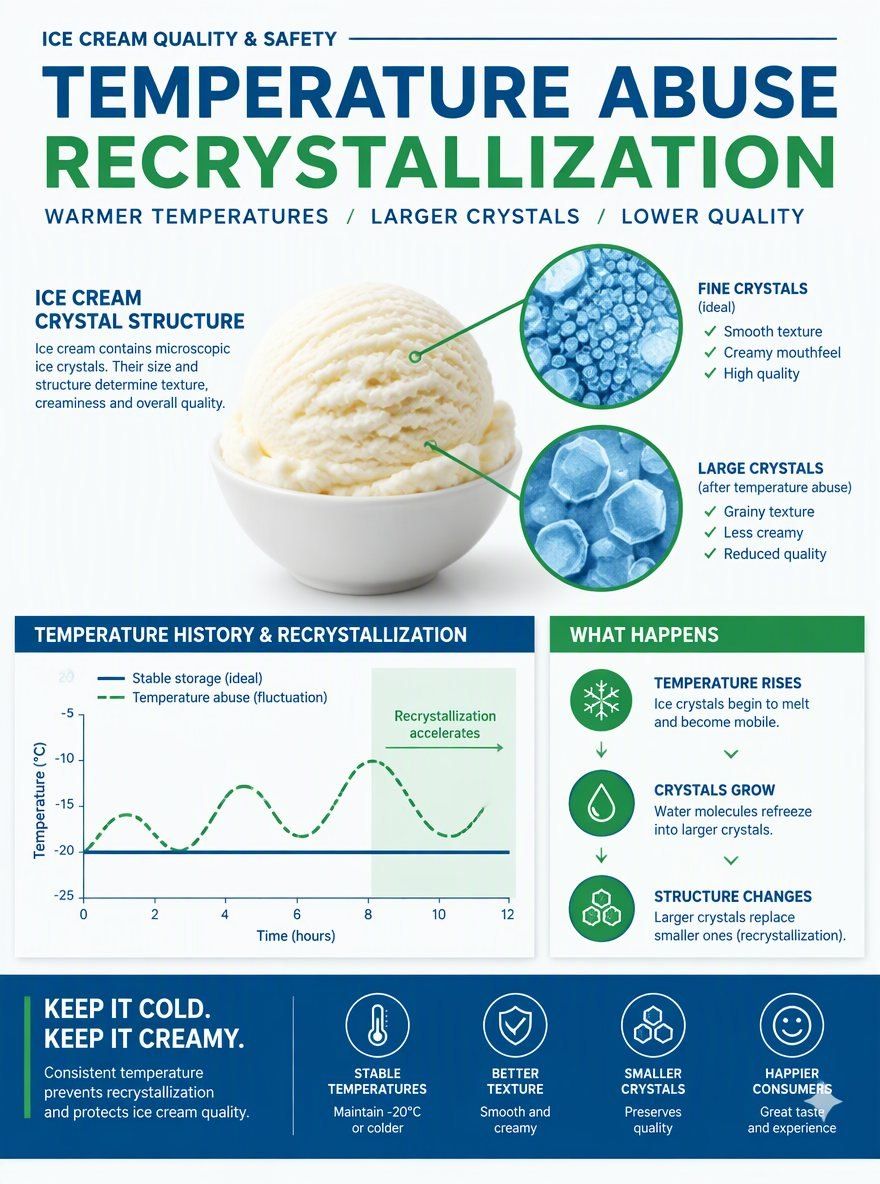
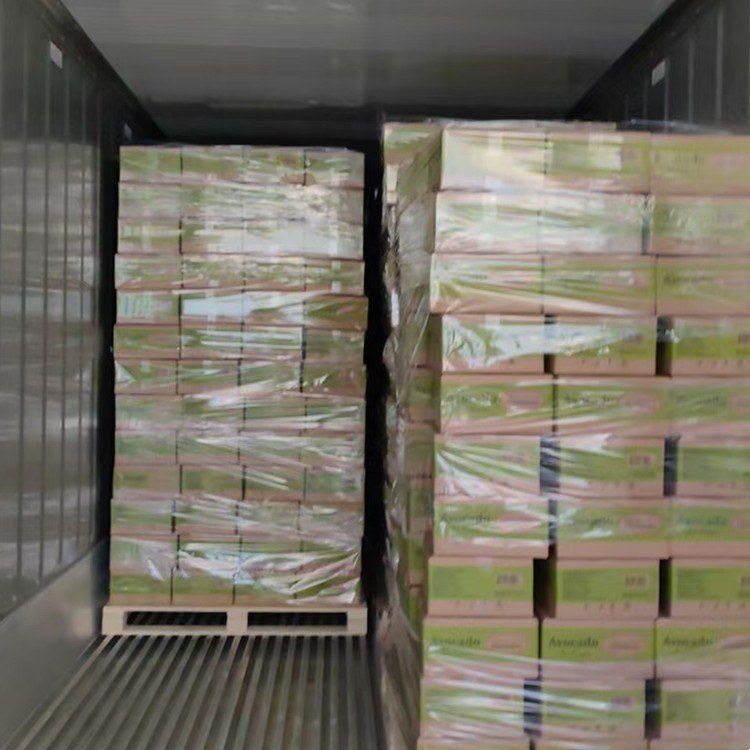
Two primary physical and chemical mechanisms drive the irreversible damage to ice cream during temperature fluctuations: recrystallization and emulsion breakdown. When a cold chain is interrupted, these parallel processes destroy both the micro-structure and sensory profile of the product long before it reaches a retail shelf.
How Does Recrystallization Create Ice Crystals?
Repeated warming and cooling cycles merge fine ice crystals into coarse ones, creating an undesirable gritty or icy texture.
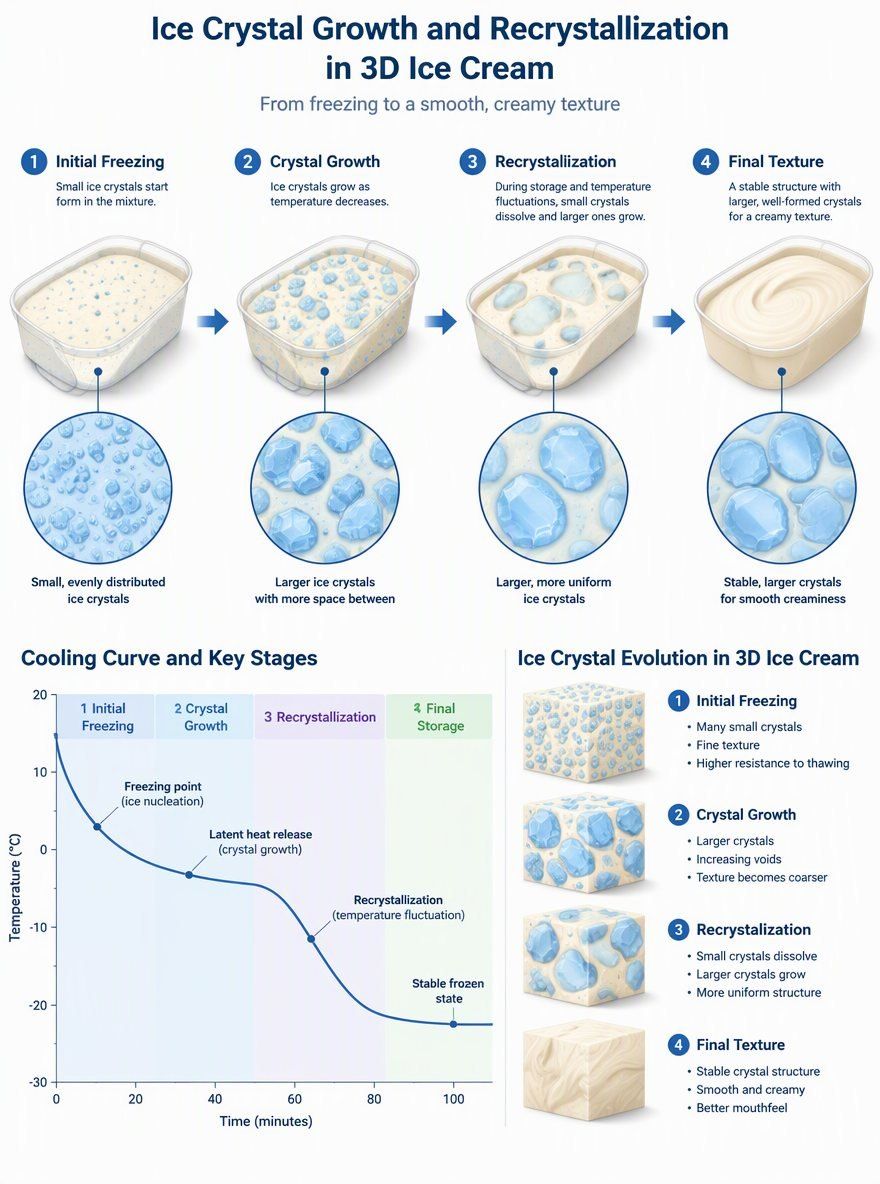
As ambient storage or transport temperatures rise even slightly above the critical threshold, smaller ice crystals melt first because of their higher surface energy. When the temperature drops again, this free water does not refreeze into new small crystals; instead, it migrates and deposits onto the surfaces of surviving larger ice crystals. Over multiple thermal cycles, average crystal size increases significantly. Once ice crystals grow beyond 50 microns, human taste receptors perceive them as coarse or sandy, destroying the smooth mouthfeel that B2B buyers expect from high-grade 3D ice cream products.
Why Does Emulsion Breakdown Ruin Fat Structure?
Separately, thermal stress causes emulsifiers and stabilizers to fail, resulting in fat separation, structural collapse, and off-flavors.
Ice cream is a complex colloidal system consisting of fat globules, air cells, and an unfrozen serum phase held together by food-grade emulsifiers and hydrocolloid stabilizers. When temperature abuse occurs, the protective protein and emulsifier film surrounding fat globules weakens and coalesces. Fat droplets agglomerate into larger clusters, destroying the delicate emulsion network that traps air and moisture. This structural failure causes rapid shrinkage, a watery melt-down, and a greasy coating on the palate, rendering the product unsellable.
| Mechanism | Primary Cause | Main Structural Defect | Sensory Impact |
|---|---|---|---|
| Recrystallization | Thermal fluctuations / refreezing | Growth of large ice crystals (>50μm) | Gritty, icy, sandy texture |
| Emulsion Breakdown | Sustained warming / stabilizer failure | Fat globule coalescence & collapse | Greasy, watery melt, off-flavor |
Why Are Importers Strict About Temperature Records?
Because both recrystallization and emulsion breakdown are completely irreversible, rigorous temperature logging is non-negotiable.

Once ice cream undergoes thermal damage, no subsequent refrigeration can reverse the crystal growth or re-emulsify the separated fat. The product cannot be salvaged or reworked. For international importers and distributors managing long-haul ocean freight, verifying continuous -20°C (or -23°C to -25°C for long-haul/high-fat items) cold chain integrity is the only way to safeguard against total inventory write-offs.
FAQ
Can thawed ice cream be refrozen and sold safely? Microbiologically it may remain stable if not spoiled, but its physical structure is permanently ruined by severe recrystallization and emulsion breakdown.
How do stabilizing systems mitigate recrystallization? Hydrocolloids increase the viscosity of the unfrozen serum phase and slow down water diffusion, retarding crystal growth during minor temperature shifts.
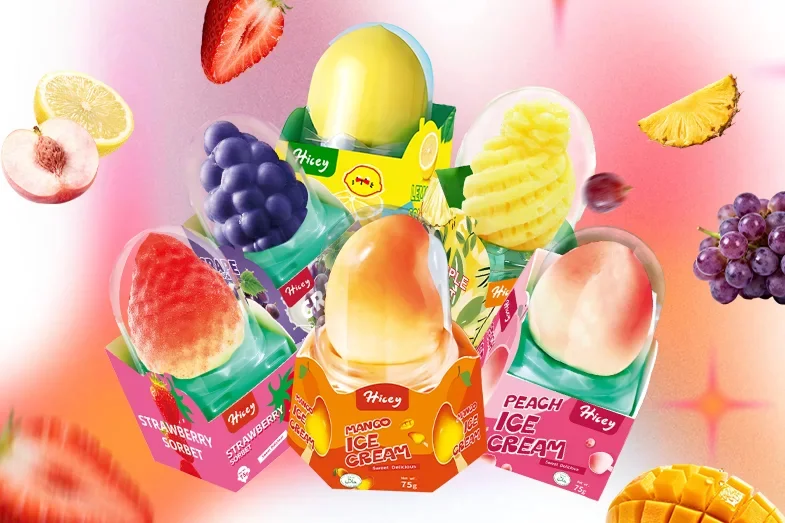
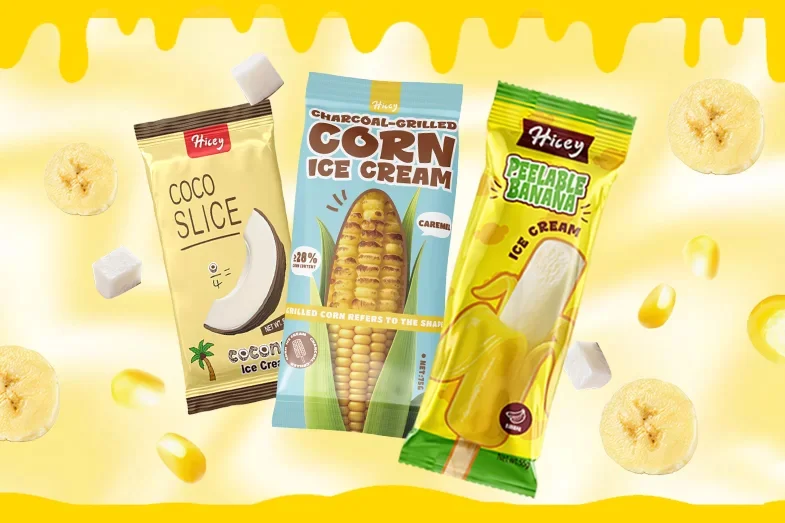
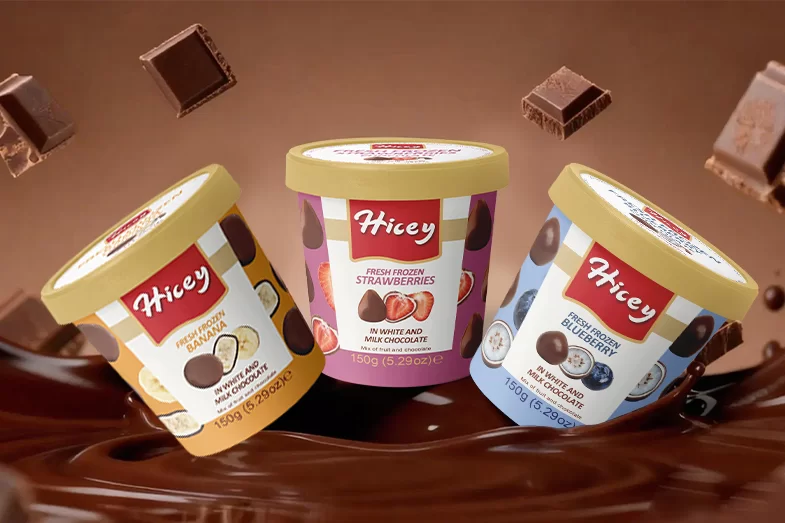
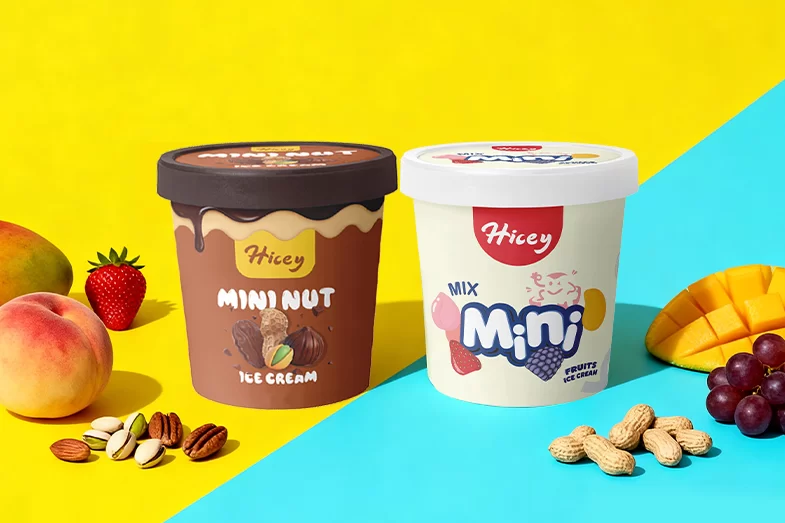
This guide was prepared by the Hicey technical and export desk. Beijing Youshare Food Co., Ltd. produces 3D novelty frozen desserts, offering 45 distinct product varieties available in both dairy and plant-based formulas for international buyers.
#IceCreamSupplyChain #ColdChainLogistics #FoodTechnology #QualityControl
备选标题(按发布位置选用)
- 标题:Recrystallization or Emulsion Breakdown: What Actually Damages Ice Cream When Temperature Rises?
- 小红书:Recrystallization or Emulsion Breakdown in Ice Cream Transport
- 抖音:What Damages Ice Cream When Temperature Rises?
Product super fit, quick contact unlock exclusive program


looking for more infermatien?
Tel+Whatsapp:
Address: Yard 8, Fuze Road ,Fangshan District.Beijing, China
610 Zhonghai International Plaza, LicangDistrict, Qingdao, Shandong, China