




-


-


-


Online Message


How Novelty Ice Cream Exporters Prevent Melting During Ocean Transit Without Rel
2026-10-15
Share to:


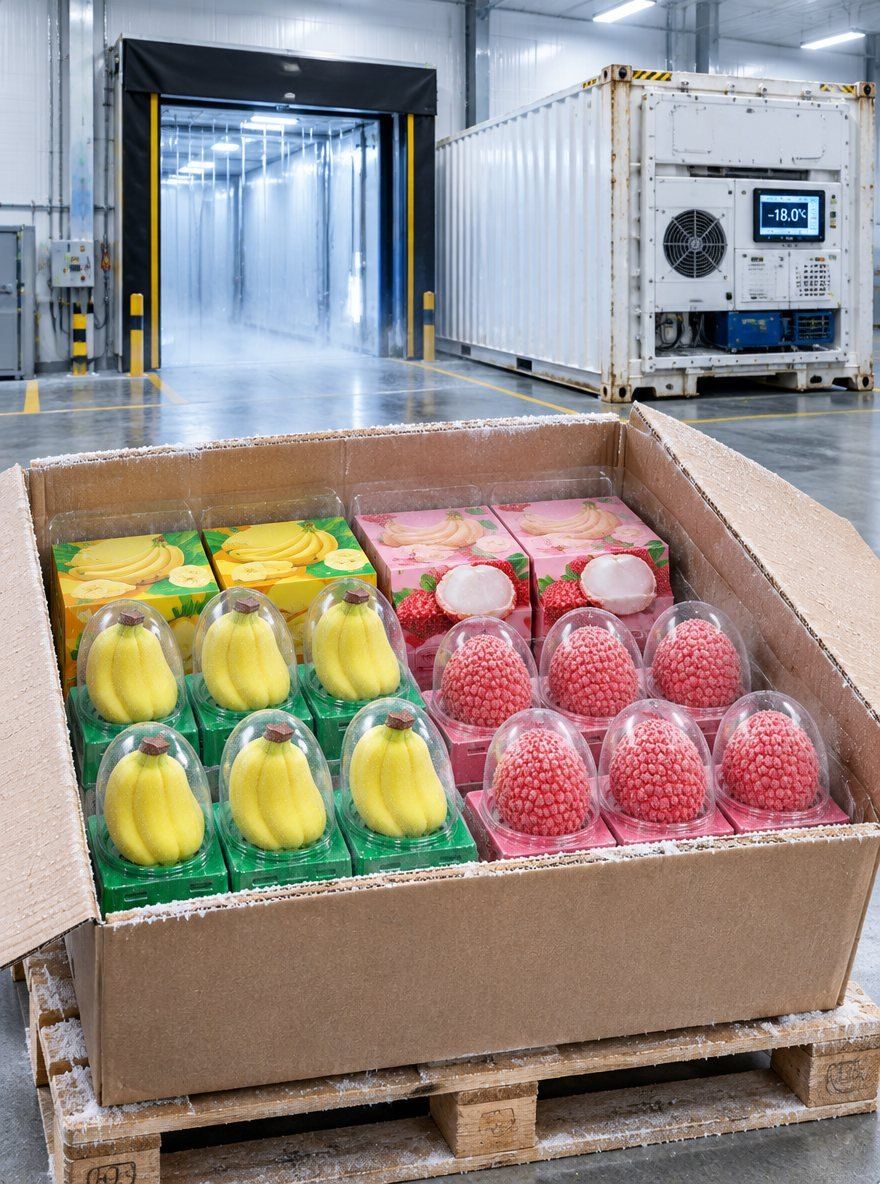
Quick Takeaway: Maintaining the structural integrity of 3D sculpted ice cream during long-haul reefer transit relies on end-to-end −18℃ temperature monitoring combined with reinforced packaging protection to mitigate irreversible recrystallization and emulsion breakdown risks. Professional exporters do not market unverified "melt-proof" formulas; they manage verified thermodynamic stability and rigorous physical protection across every shipping mile.
Why are "melt-proof" claims in frozen dessert logistics fundamentally unreliable?
Any supplier claiming that their ice cream "guarantees zero melting" or possesses a "secret anti-melt formula" is relying on marketing rhetoric rather than food engineering reality.
Ice cream is a delicate frozen emulsion composed of ice crystals, air cells, and fat globules suspended within an unfrozen aqueous serum phase. Basic thermodynamics dictates that ice crystals thaw whenever environmental temperatures rise above their freezing point. While food hydrocolloids and fat networks can slightly retard room-temperature drip rates on a plate, they cannot prevent core thermal degradation during multi-week ocean freight inside an unpowered or malfunctioning container.
For overseas B2B buyers importing creative novelty ice cream by the full containerload (FCL), accepting unproven thermal resistance promises creates massive commercial risk. Professional manufacturers avoid absolute guarantees and focus entirely on measurable refrigeration controls and protective packaging engineering.
What physical damage occurs when cold-chain temperatures fluctuate during ocean freight?
Temperature abuse during ocean freight does not merely soften ice cream temporarily; it activates two irreversible structural degradation pathways that destroy sculpted novelties prior to port clearance.
| Degradation Pathway | Microstructural Mechanism | Observable Quality Failure on Novelty Shapes | Reversibility |
|---|---|---|---|
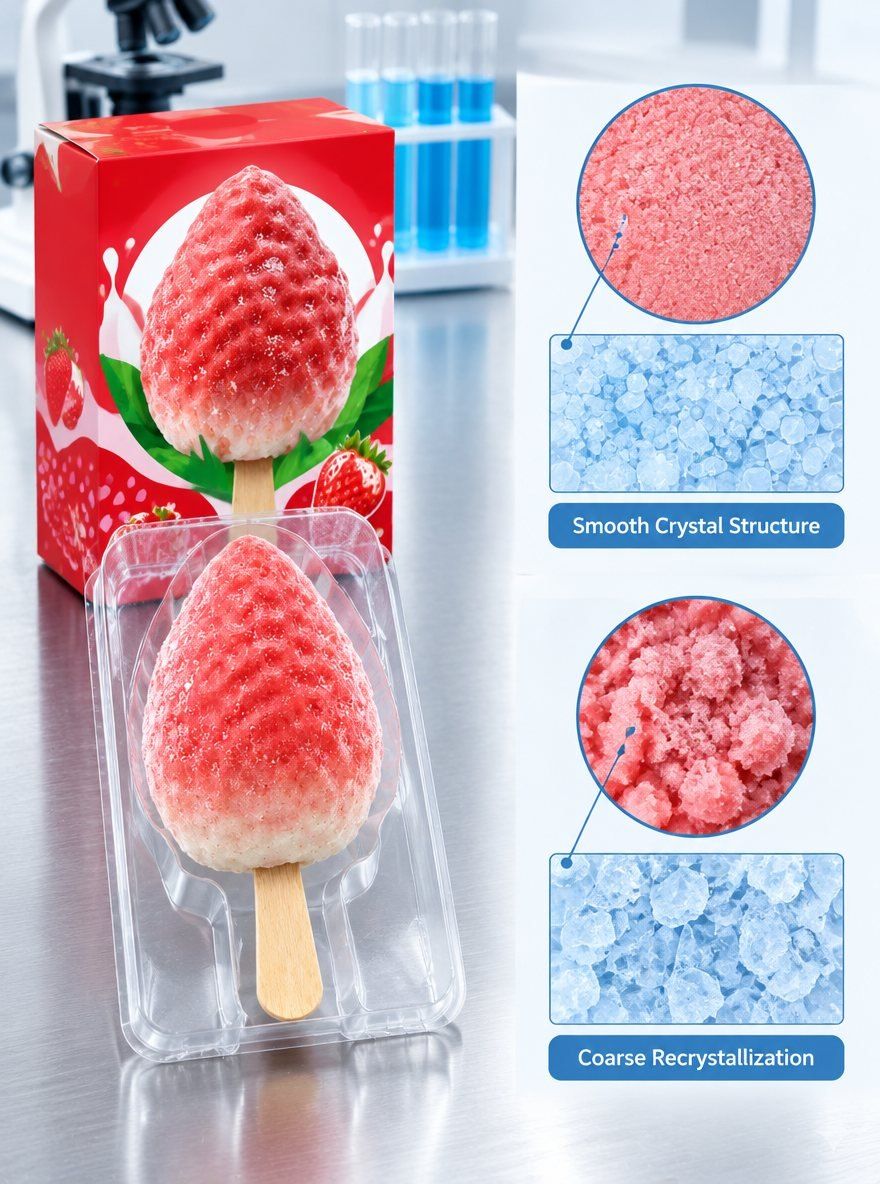
| Ice Recrystallization | Repetitive thermal cycling drives migratory ice crystal fusion, converting microscopic crystals into coarse grains. | Gritty, sandy mouthfeel; loss of creamy texture; dense surface frost crystals. | Irreversible (refreezing cannot restore the microscopic crystal matrix). |
| Emulsion Breakdown | Destabilization of the fat globule membrane causes partial lipid coalescence and serum separation. | Slumping of 3D contours, collapse of delicate features, structural detachment from the stick. | Irreversible (melted contours refreeze as distorted blocks). |
When an ocean reefer container experiences an intermittent temperature rise from −18℃ to −8℃ before returning to freezing, the product does not recover its original form. Fine facial details, fruit textures, and geometric edges on 3D sculpted ice cream slump permanently during the warm phase. Refreezing simply locks in the ruined, distorted geometry.
How do professional manufacturers protect creative novelty ice cream in practice?
Industrial protection of sculpted novelties across trans-Pacific and global maritime routes relies on two physical engineering safeguards: continuous −18℃ monitoring and reinforced multi-tier packaging.
1. End-to-End −18℃ Temperature Monitoring
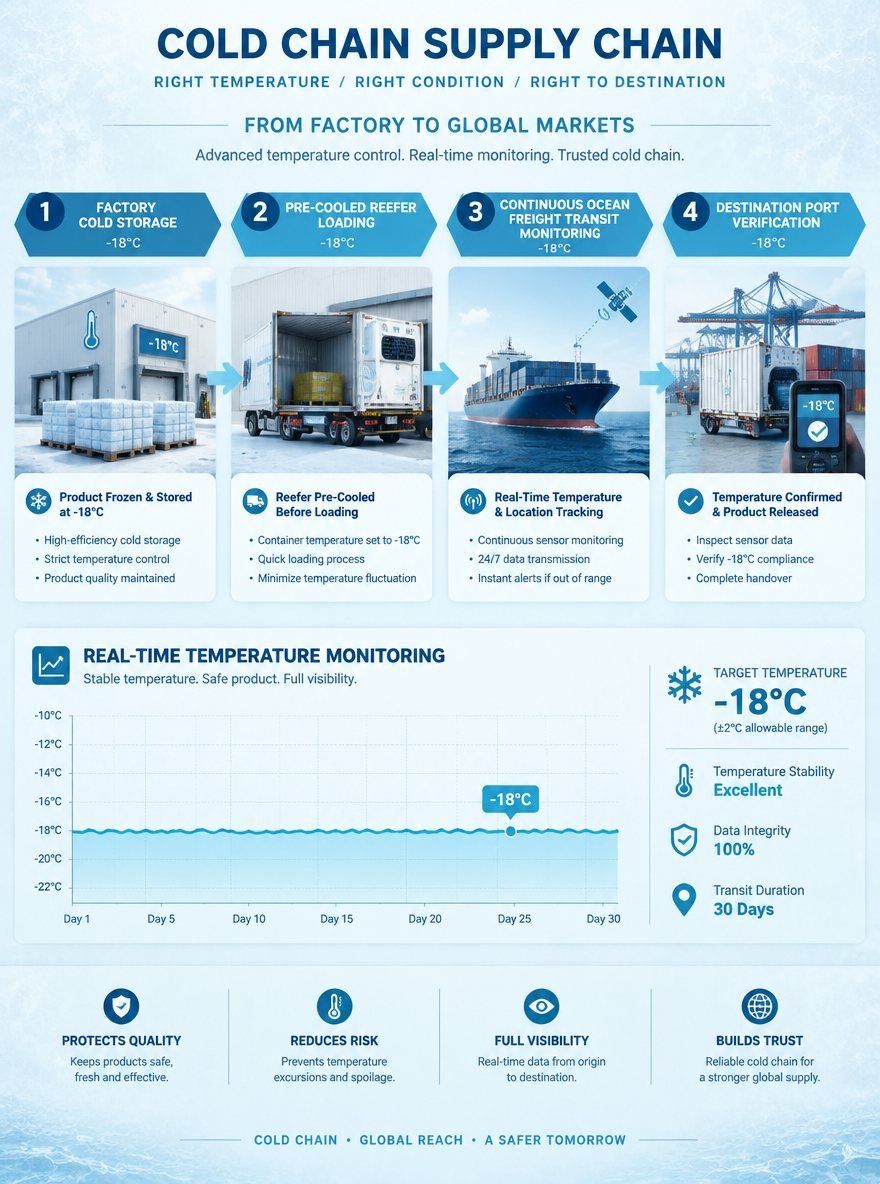
Standard international cold-chain protocol mandates that frozen desserts remain at or below −18℃ (0°F) throughout loading, voyage transit, and customs staging. Reputable exporters install calibrated single-use USB or cloud-enabled temperature data loggers inside designated master cartons across the stow. This establishes an objective, auditable temperature record from the factory gate to the destination warehouse, providing verifiable documentation in the event of carrier cold-chain failures.
2. Reinforced Multi-Tier Structural Packaging
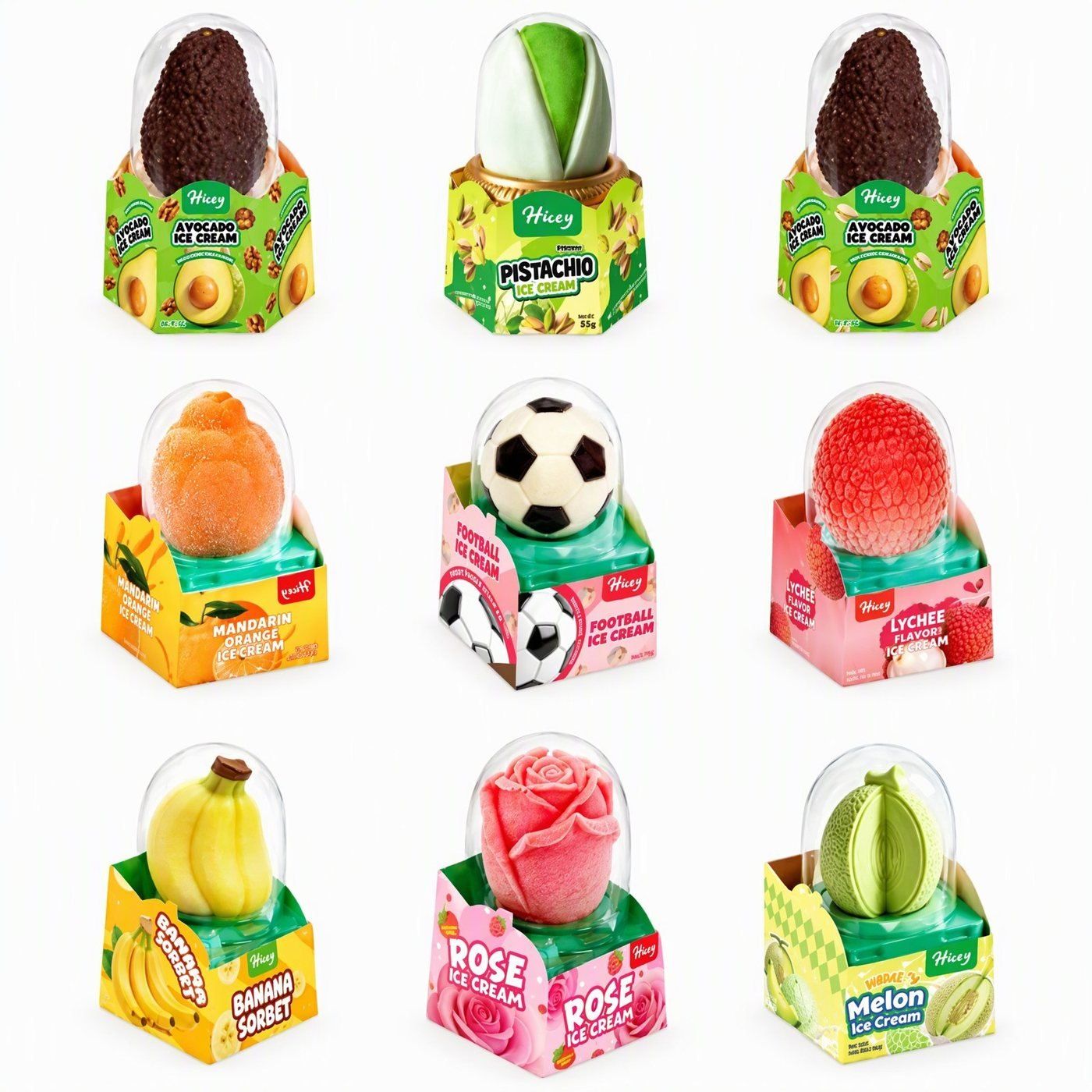
Sculpted novelties demand rigid physical containment to withstand both static compression and marine vibrations: - Individual Rigid Blisters / Enclosures: Each novelty unit is housed in a dedicated contour-fitted blister pack or inner box, preventing adjacent pieces from touching or shearing during transit. - Heavy-Duty Master Cartons: High-grade corrugated master cartons with reinforced edge-crush test (ECT) ratings insulate against ambient temperature swings and resist moisture-induced buckling inside humid marine environments. - Engineered Airflow Stacking: Master cartons are palletized to maintain continuous air circulation from the reefer T-bar floor through the cargo load, eliminating thermal dead zones.
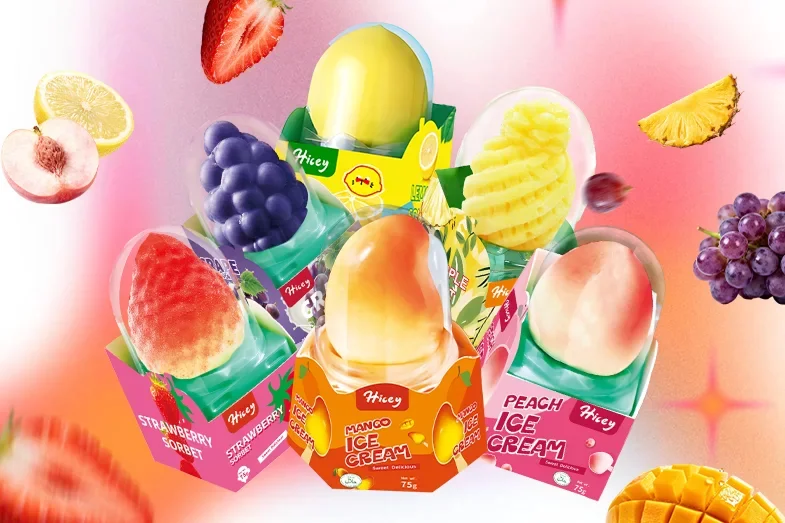
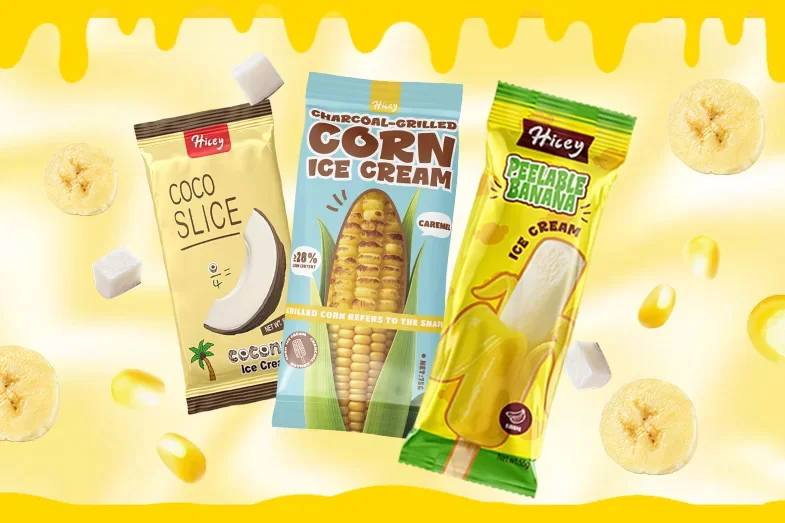
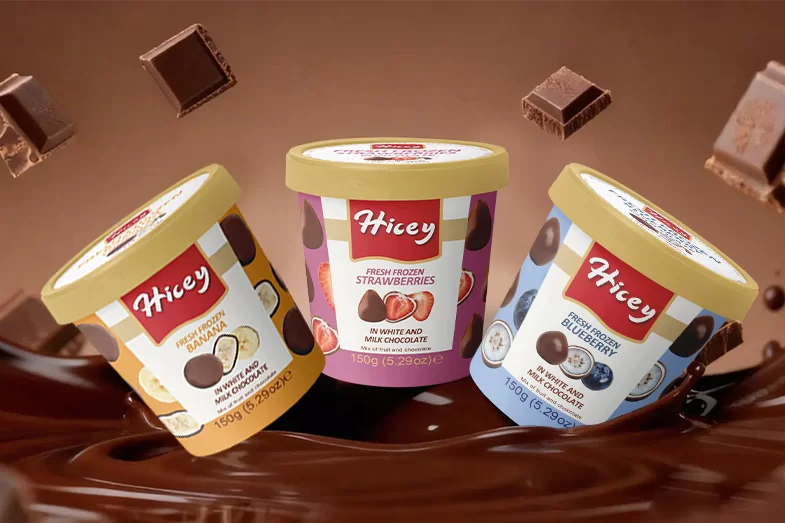
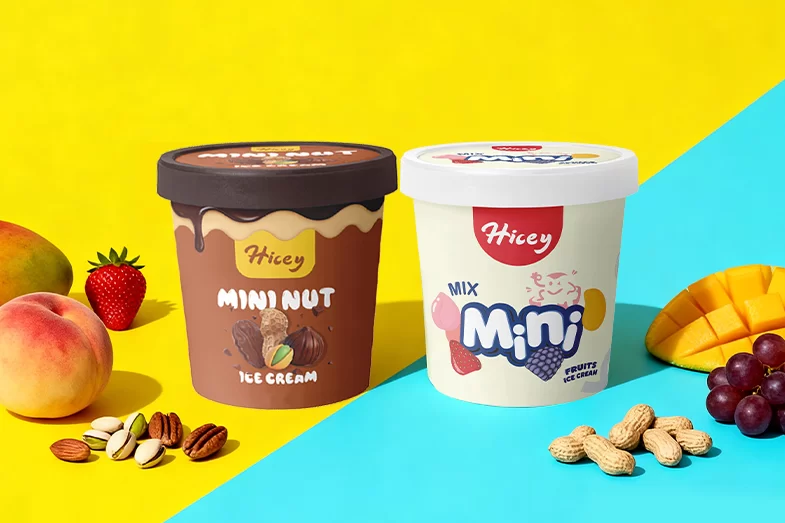
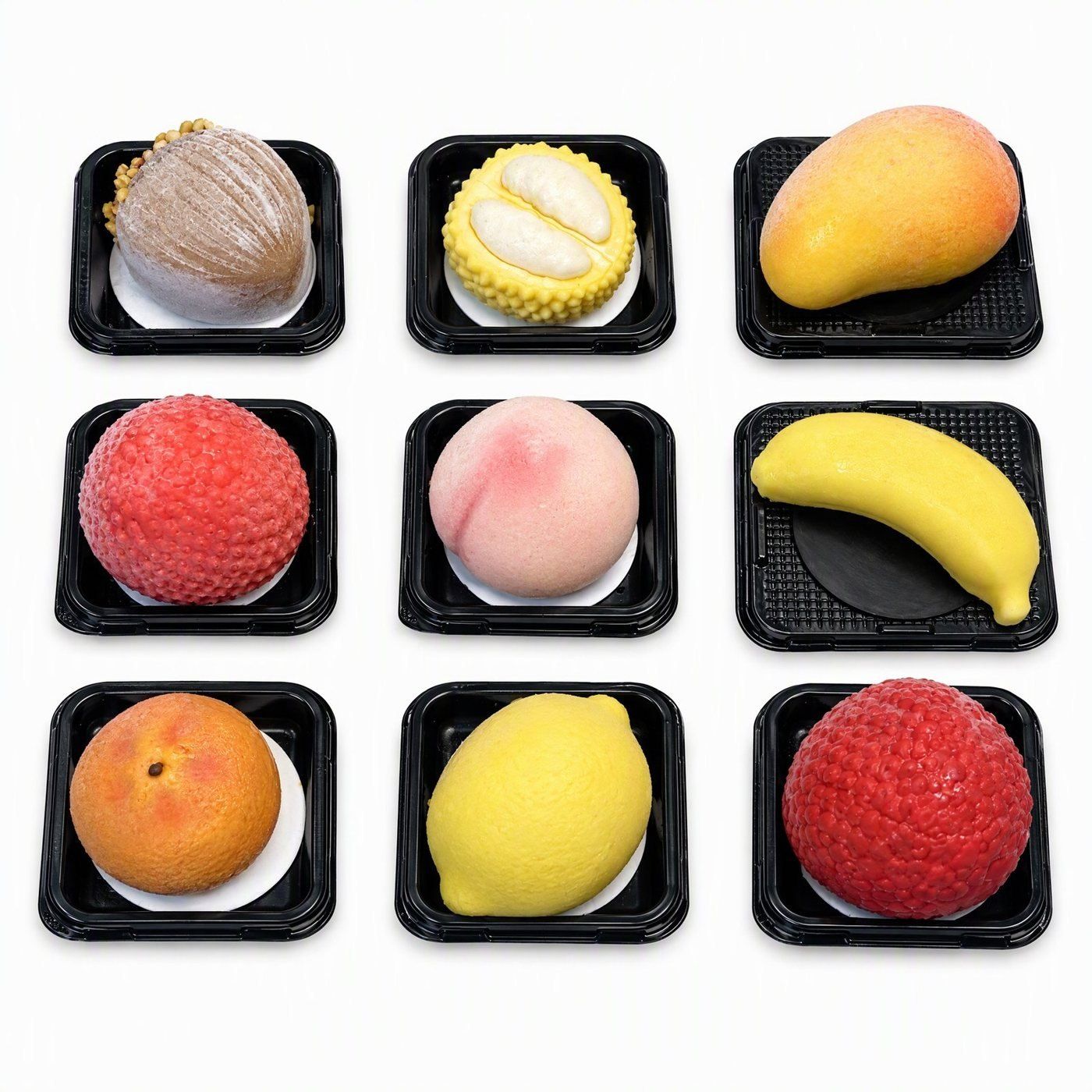
In commercial export operations, Hicey, the ice cream brand of Beijing Youshare Food Co., Ltd., applies this dual-layer methodology to protect creative novelty ice cream. Rather than making unsubstantiated claims of thermal resistance, the factory combines heavy-duty packaging structures with strict cold-chain monitoring protocols to minimize temperature variation risks during maritime transit.
What operational checkpoints should buyers verify before booking reefer containers?
Importers should audit four concrete operational criteria with their freight forwarders and suppliers before cargo departs:
- Reefer Setpoint Documentation: Verify that shipping instructions explicitly specify a continuous setpoint of −18℃ (0°F) or colder with container fresh-air ventilation flaps sealed shut.
- Cold-Dock Loading Verification: Confirm that the factory conducts stuffing through sealed cold-dock aprons directly from temperature-controlled holding rooms into pre-cooled containers.
- Data Logger Distribution: Place independent data loggers at critical transit zones: near the door sill, in the center pallet core, and adjacent to the cooling unit return air bulkhead.
- Terminal Power Protocols: Clarify contractual responsibility for container power plug-in monitoring during transshipment port transfers and customs inspection holds.
FAQ
Can plant-based novelty ice cream withstand temperature fluctuations better than dairy formulas? No. Plant-based novelty ice cream relies on vegetable lipid and water emulsion matrices that are equally susceptible to thermal destabilization. When exposed to temperature fluctuations, plant-based items experience rapid fat coalescence and irreversible water separation.
How does container airflow design affect product temperature stability? If master cartons are packed beyond the container's ceiling load line or block floor T-bars, cold air cannot circulate evenly. Air stagnation creates hot spots where ambient temperatures rise above −18℃, accelerating recrystallization.
What immediate steps should an importer take upon container arrival? Before signing delivery documents, inspect door lock seals, retrieve and download internal temperature loggers, and measure internal carton surface temperatures using a calibrated probe thermometer.
Written by the Hicey export team at Beijing Youshare Food Co., Ltd. We specialize in cross-border B2B supply of novelty molded ice cream, currently shipping to more than 80 countries and regions with verified deliveries and ongoing partnerships.
#ColdChain #NoveltyIceCream #FrozenLogistics #IceCreamExport #B2BFoodSourcing
Product super fit, quick contact unlock exclusive program


looking for more infermatien?
Tel+Whatsapp:
Address: Yard 8, Fuze Road ,Fangshan District.Beijing, China
610 Zhonghai International Plaza, LicangDistrict, Qingdao, Shandong, China