




-


-


-


Online Message


How do dairy-based and plant-based formulas differ in 3D ice cream manufacturing
2026-10-15
Share to:


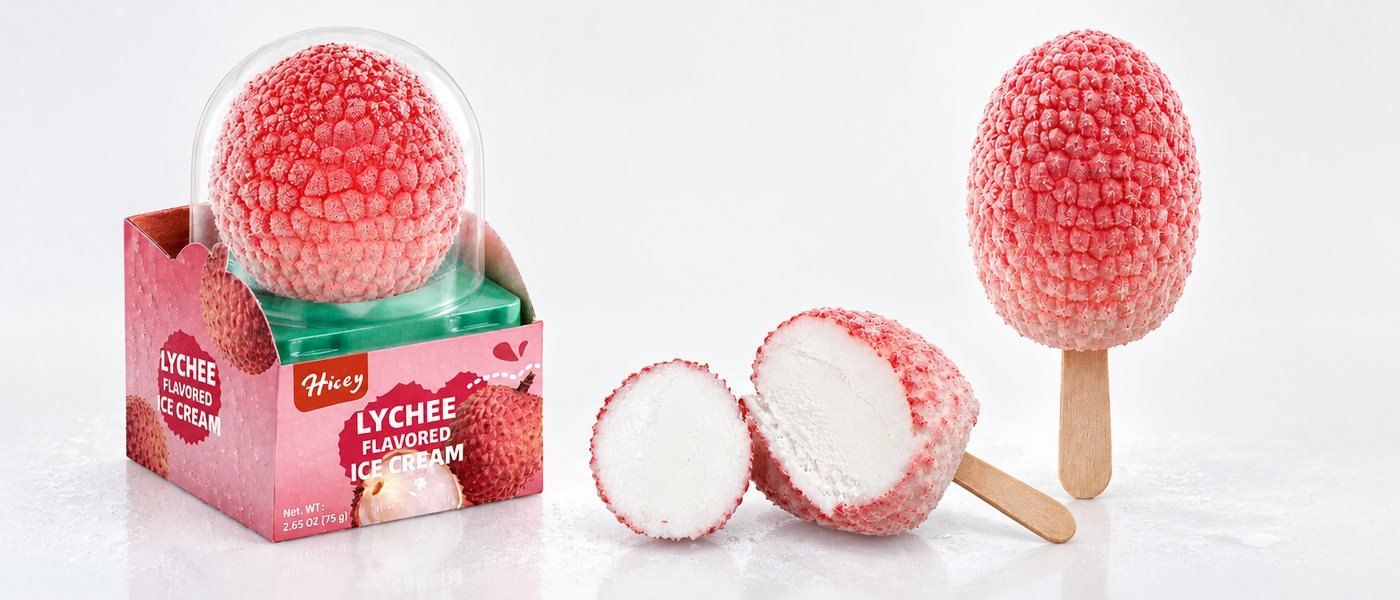
Switching a molded ice cream from dairy to plant-based requires re-engineering fat structure and freeze-thaw stability rather than simply replacing milk, ensuring smooth texture and mold release without changing the external 3D visual contours. For US retail buyers and private-label brand owners, offering both traditional dairy formula options and non-dairy alternatives across the same novelty line does not require redesigning custom tooling, but it does require distinct processing parameters to maintain physical definition through international transit.
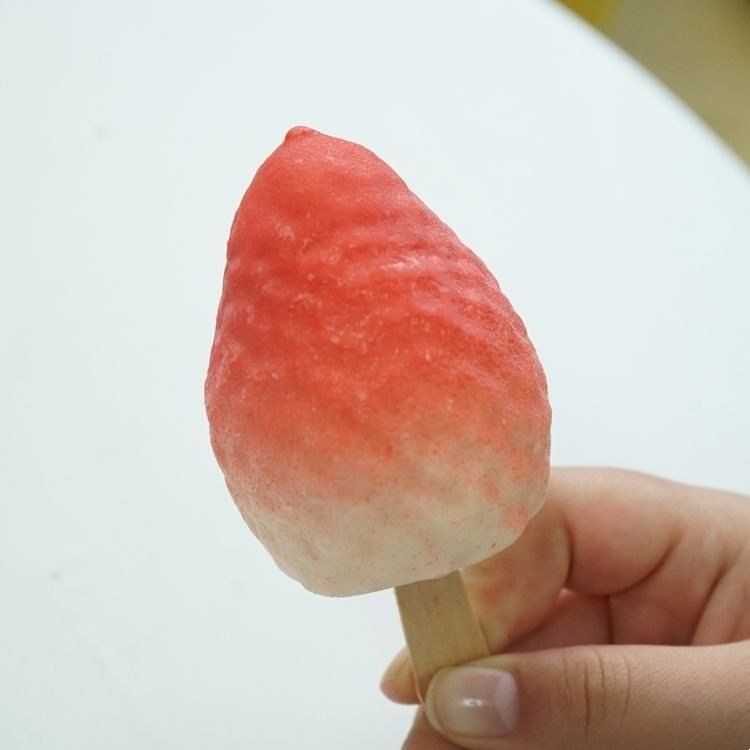
What formulation hurdles occur when switching an ice cream shape from milk-based to plant-based?
In standard ice cream manufacturing, dairy fat provides structure, air cell stabilization, and a clean melt. When formulating plant-based ice cream using coconut oil, almond milk, or oat bases, food scientists face three core technical challenges:
- Fat Crystallization and Demolding: Dairy butterfat crystallizes within a specific temperature range that allows clean separation from complex mold crevices. Plant lipids behave differently; coconut fat hardens quickly but can fracture along sharp relief lines, while liquid vegetable fats make the mix too soft to hold sharp 3D edges upon release.
- Off-Flavor Masking: Plant proteins naturally carry earthy or nutty notes that clash with light fruit flavors. Masking these notes requires precise emulsifier and flavoring adjustments without exceeding regional additive limits.
- Freeze-Thaw Resistance: Dairy solids and proteins naturally bind water. In a plant-based matrix, unbonded water migrates during cold chain temperature fluctuations, creating coarse ice crystals and structural shrinkage that collapse delicate surface reliefs.
Can a single 3D novelty ice cream mold run both dairy and non-dairy recipes?
Yes. Dedicated 3D ice cream manufacturing lines can produce identical visual profiles using both formulas, provided the physical overrun and total solids are precisely matched.
The table below outlines how manufacturing parameters differ between formulas when molding high-definition novelty bars:
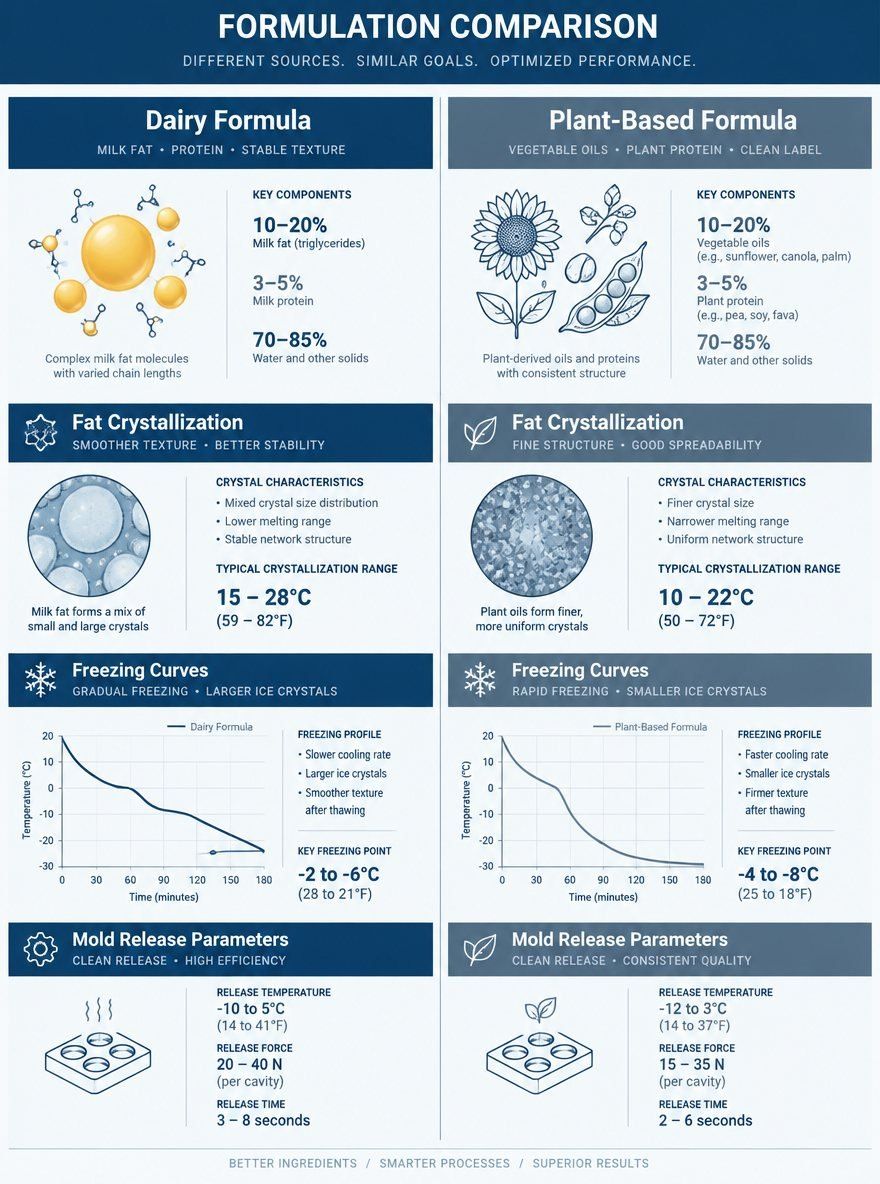
| Parameter | Dairy Formula | Plant-Based Formula | Operational Impact on 3D Shape |
|---|---|---|---|
| Primary Fat Base | Fresh milk, cream, anhydrous milk fat | Coconut oil, plant protein isolates, oat/nut emulsions | Determines demolding release angle and line speed |
| Texture & Viscosity | Natural dairy emulsion, standard overrun control | Modified plant fibers, tailored stabilizer blends | Prevents air pocket voids in detailed 3D crevices |
| Freezing Point Curve | Predictable lactose and sucrose curve | Adjusted sucrose/maltitol/dextrose balance | Prevents brittle cracking during deep-freeze extraction |
| US Regulatory Compliance | US Standard of Identity for Ice Cream (pasteurized dairy) | Non-dairy frozen dessert labeling guidelines | Dictates front-of-pack claims and allergen declarations |
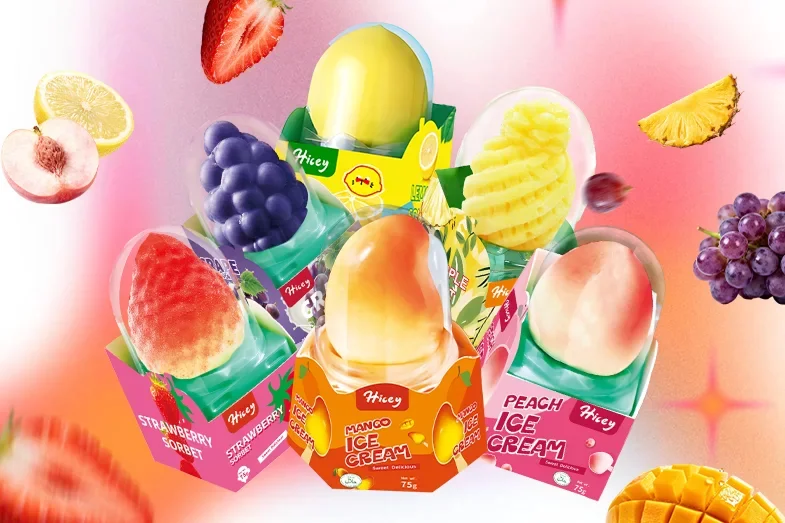
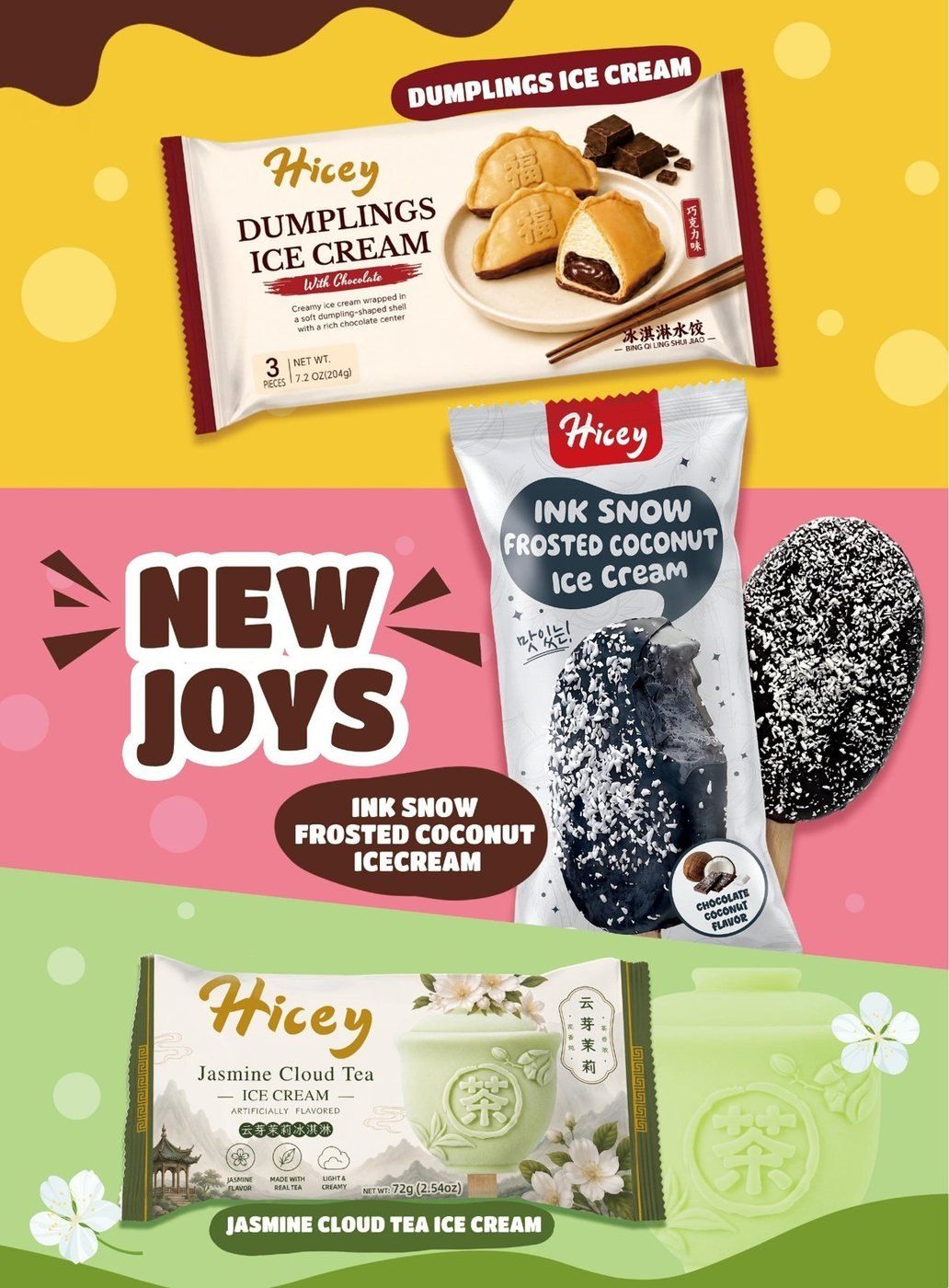
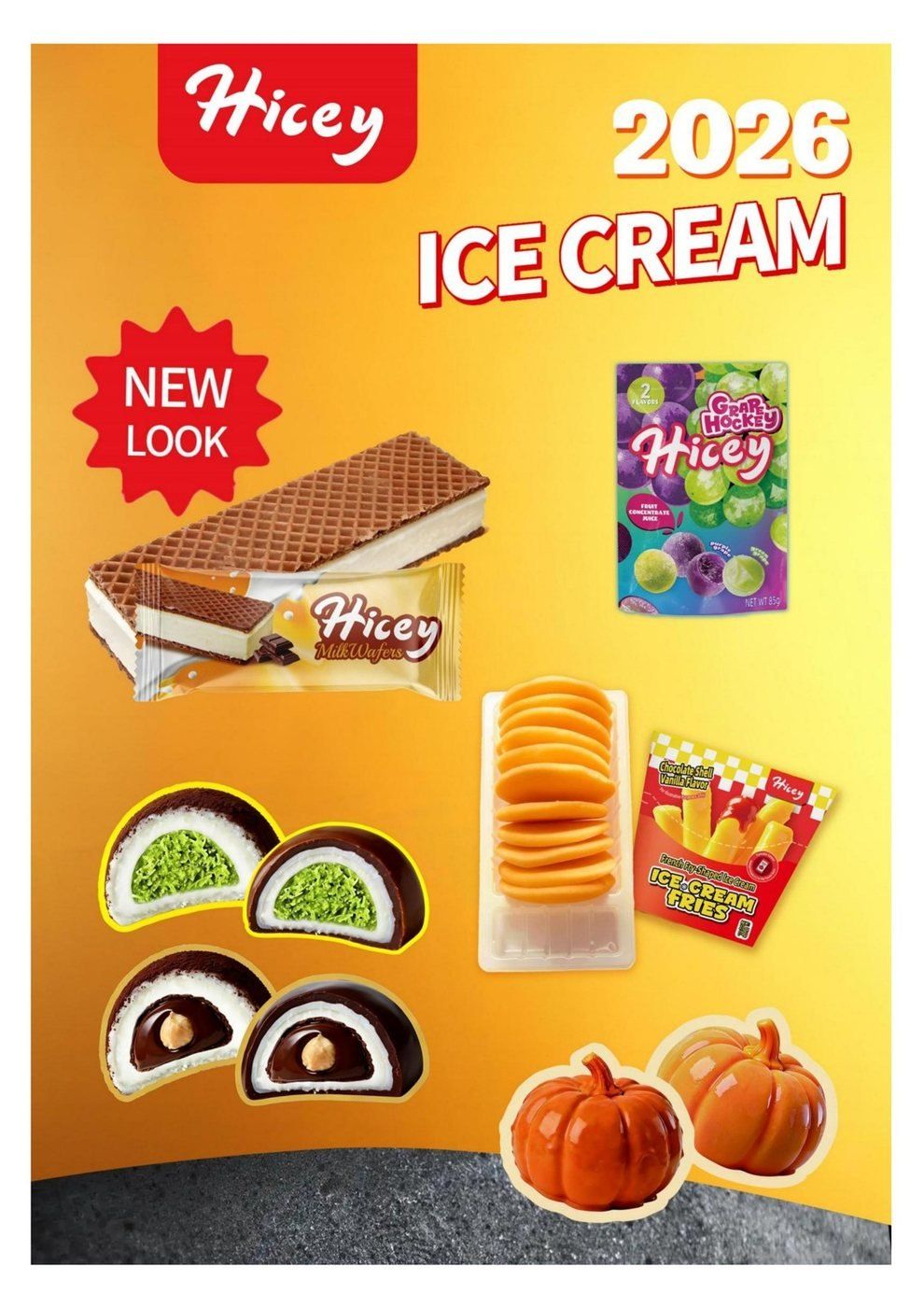
At Hicey, the ice cream brand of Beijing Youshare Food Co., Ltd., product architecture across 45 novelty categories is engineered around dual-formula flexibility. The production line utilizes matched rheological baselines so that complex shapes—such as 3D sculpted fruit or intricate geometric items—can run in either dairy or plant-based configurations within the same exterior dimensions. This enables commercial buyers to test both lines under single logistics plans without absorbing secondary tooling costs.
How does formulation impact cold chain transit to North America?
For export to the US market, 3D novelty bars must endure ocean container transport and multiple handling transfers. Because plant-based matrices are more sensitive to temperature variance, industrial exporters apply two specific manufacturing controls: - Stabilizer and overrun calibration: Adjusting the air incorporation ensures that structural collapse does not occur if storage temperatures shift between -18°C and -22°C. - Protective primary packaging: Utilizing rigid, clear individual blister shells prevents physical abrasion against inner carton walls during transit, preserving embossed fruit textures regardless of formula choice.
FAQ
Can private-label buyers customize sweetness levels for both formulas? Yes. Sweetness levels and flavor profiles can be adjusted during recipe calibration to meet US buyer specifications, while maintaining the structural solids needed for clean mold extraction.
Does switching to plant-based change the unit weight or carton dimensions? No. Typical single-serve items weigh between 65g and 75g. Formulations are balanced so that total mass and carton pack sizes remain consistent across both versions.
Are separate factory registrations required for US customs clearance? Facilities exporting either dairy or plant-based frozen desserts must hold an active US FDA food facility registration and adhere to FSMA preventive controls.
Written by the Hicey export team at Beijing Youshare Food Co., Ltd. We specialize in cross-border B2B supply of novelty molded ice cream, currently shipping to more than 80 countries and regions with verified deliveries and ongoing partnerships.
#3DIceCream #PlantBasedIceCream #DairyFormula #IceCreamManufacturing #B2BFoodExport
Product super fit, quick contact unlock exclusive program


looking for more infermatien?
Tel+Whatsapp:
Address: Yard 8, Fuze Road ,Fangshan District.Beijing, China
610 Zhonghai International Plaza, LicangDistrict, Qingdao, Shandong, China