







-


-


-


Online Message


Halal certificate, FDA registration, ISO 22000: what does each do for an ice cre
2026-11-03
Share to:


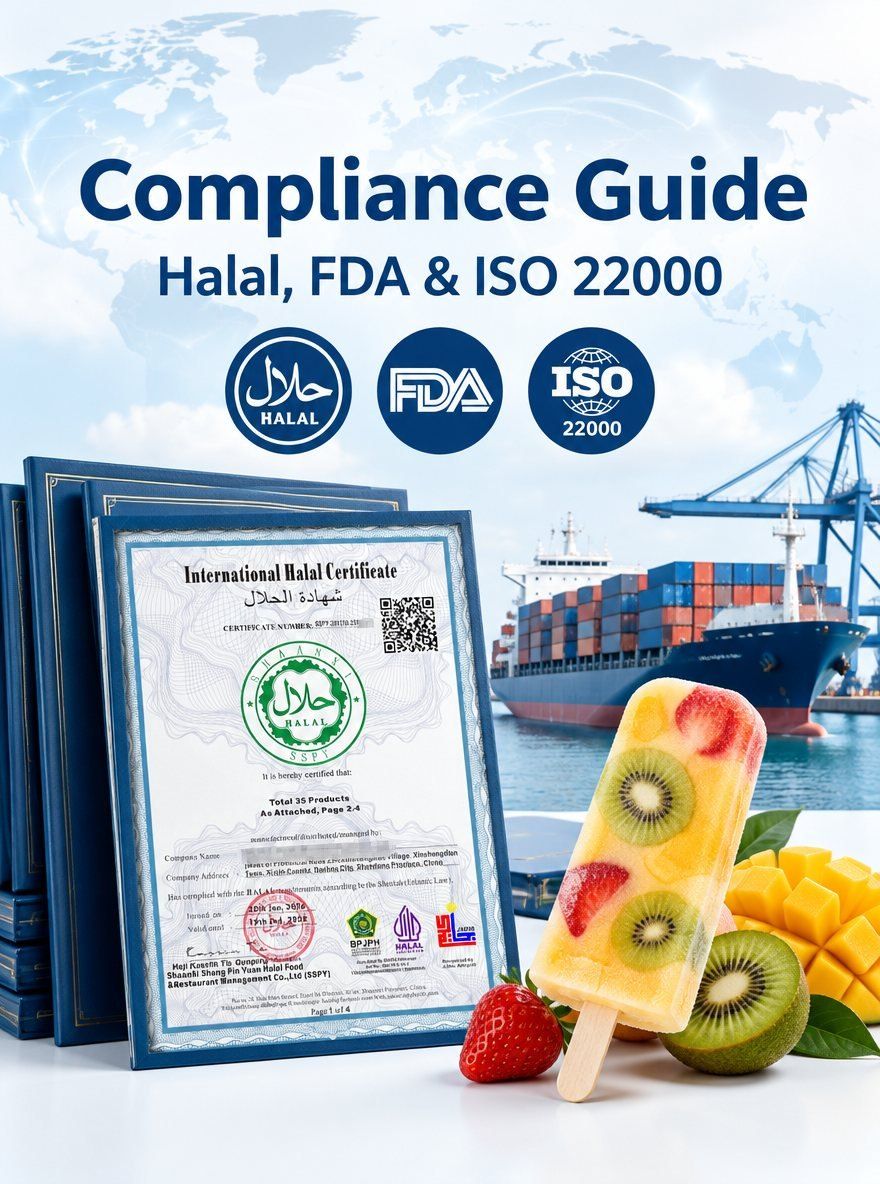
Navigating export compliance as an ice cream exporter requires clear distinctions between certifications. Each serves a distinct regulatory and market function. A halal certificate supports access to markets that require it, subject to the importing country's list of recognized certifiers. FDA facility registration is the obligation for shipping to the United States. ISO 22000 certifies the food-safety management system. None replaces another.
What does a halal certificate actually do for an ice cream exporter?
A halal certificate verifies that the production process complies with Islamic dietary laws. For an ice cream exporter, such as Hicey, this document is an absolute market-access prerequisite when shipping to Muslim-majority countries or specific demographic segments in international trade.
However, holding a certificate is only the first step. Acceptance depends entirely on whether the issuing body is recognized by the importing country’s official religious or standards authority. Exporters must verify local accreditation lists before dispatching shipments.
Why is FDA facility registration mandatory for the US market?
When exporting ice cream to the United States, FDA facility registration is a legal obligation rather than a voluntary quality badge. Under United States regulations, any foreign facility that manufactures, processes, packs, or holds food for consumption in the US must be registered with the Food and Drug Administration.
This registration provides the FDA with a record of foreign food facilities. It is important to note that registration is a facility-level requirement; it does not constitute a product approval or an "FDA approved" status for individual ice cream batches.
How does ISO 22000 manage food safety?
ISO 22000 is an international standard that specifies requirements for a food safety management system (FSMS). Unlike market-specific religious or governmental filings, ISO 22000 applies across global supply chains.
It establishes systematic controls for hazard analysis and critical control points throughout the manufacturing process. An ISO 22000 certificate demonstrates to international distributors and commercial buyers that the facility operates under a rigorous, internationally audited safety framework.
Summary of compliance requirements
| Certification / Filing | Primary Purpose | Scope & Application |
|---|---|---|
| Halal Certificate | Market access compliance | Required for specific religious markets; must be issued by a recognized body. |
| FDA Facility Registration | Legal obligation for US entry | Mandatory for facilities exporting food to the US; facility-level, not product approval. |
| ISO 22000 | Food safety management | Global standard establishing systematic hazard and quality controls. |
FAQ
Can ISO 22000 replace FDA registration when exporting to the US? No. ISO 22000 is a food safety management standard, whereas FDA facility registration is a strict legal requirement for shipping food products into the United States.
Does a halal certificate guarantee acceptance in all Muslim-majority countries? Not automatically. Acceptance depends on whether the specific certification body is officially recognized by the importing nation's governing authority.
This guide was prepared by the Hicey technical and export desk. Beijing Youshare Food Co., Ltd. produces 3D novelty frozen desserts, offering 45 distinct product varieties available in both dairy and plant-based formulas for international buyers.
#Compliance #IceCreamExporter #HalalCertificate #FDA #ISO22000
Product super fit, quick contact unlock exclusive program


looking for more infermatien?
Tel+Whatsapp:
Address: Yard 8, Fuze Road ,Fangshan District.Beijing, China
610 Zhonghai International Plaza, LicangDistrict, Qingdao, Shandong, China