






-


-


-


Online Message


What Specifications Show Whether a Shaped Ice Cream Will Keep Its Form in Transi
2026-11-03
Share to:


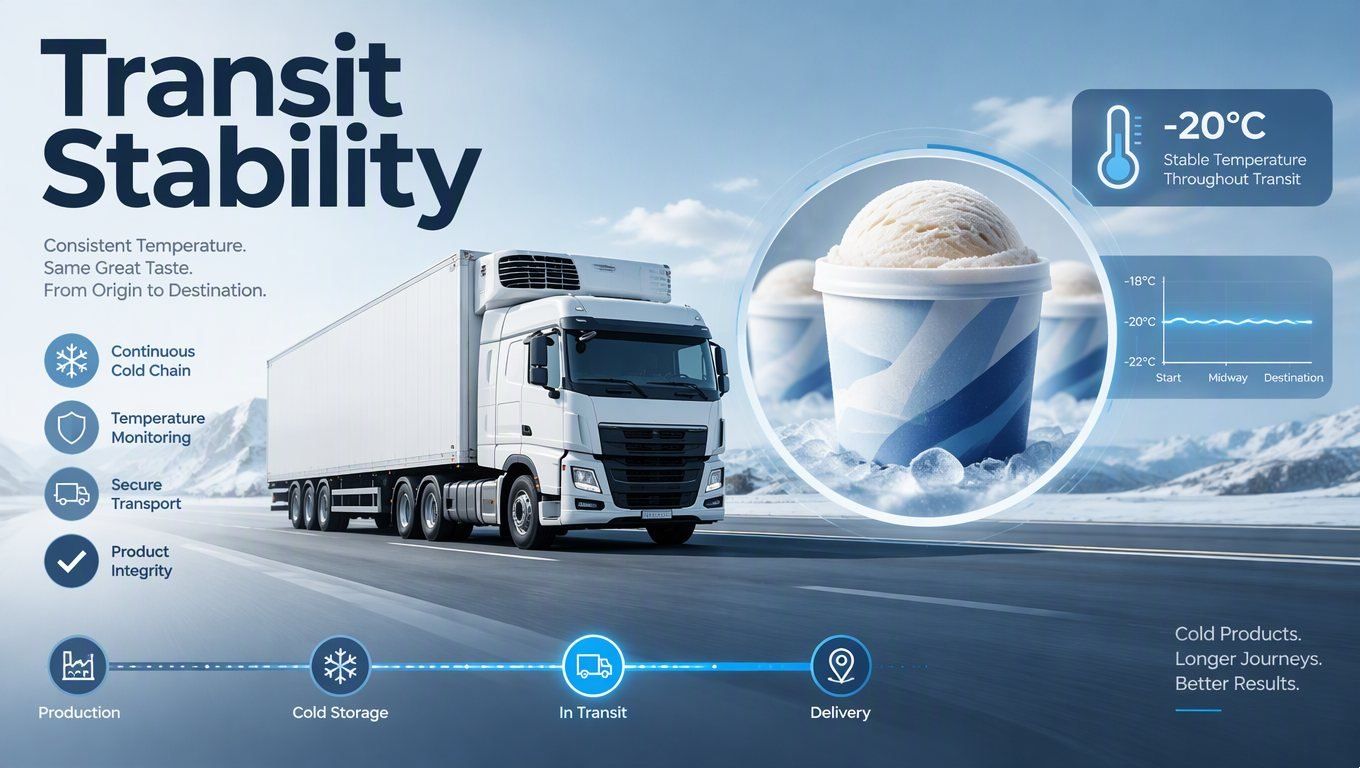
Ask for the storage and transport temperature, the packaging design against fluctuation, unit weight with overrun, and a production sample. No specification protects against a broken cold chain, since both recrystallization and emulsion breakdown are irreversible.
When importing novelty or shaped ice cream, structural stability during transit determines whether the product arrives retail-ready or as an unsellable loss. Importers cannot rely on visual appearance alone. Reviewing specific technical metrics before placing an order prevents structural collapse caused by long-distance shipping.
What Storage and Transport Temperatures Are Required?
Standard marine and inland logistics for frozen novelty items require a stable ambient temperature of -20°C (MSC standard recommendation). For high-fat formulations, chocolate-coated items, or long-haul ocean routes crossing tropical zones, the recommended temperature is -23°C to -25°C.
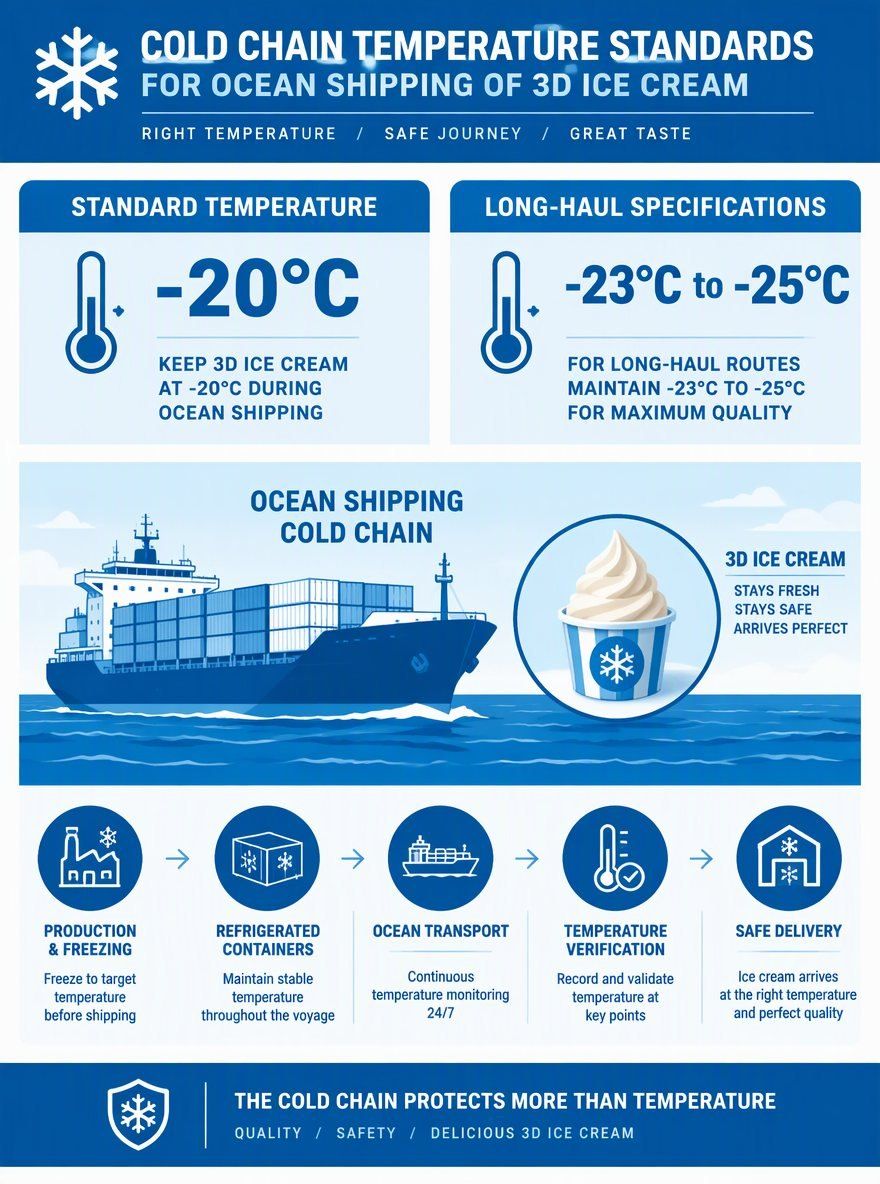
Temperature fluctuations during transit are the primary threat to shaped ice cream. If the temperature rises and falls, microscopic ice crystals melt and refreeze, forming larger crystals that ruin the texture and crack the coating.
How Does Packaging Design Prevent Fluctuation?
Packaging specifications must provide physical cushioning and thermal buffering. Review outer carton burst strength, inner dividers, and blister tray thickness.
For 3D fruit-shaped items or delicate novelties, individual transparent PET cover boxes or rigid blister trays prevent mechanical friction and edge chipping during container handling and rough sea transit.
Why Do Unit Weight and Overrun Matter?
Overrun—the percentage of air whipped into the ice cream mix during freezing—directly impacts structural density. Low overrun means higher solid density, which helps maintain the shape of intricate 3D designs.
Check the nominal unit weight relative to volume. A heavier unit with controlled overrun resists minor thermal shocks better than an overly aerated, lightweight product that collapses under pressure.
Why Is a Production Sample Indispensable?
Paper specifications only indicate theoretical capability. Request physical production samples from the same batch parameters to test physical resilience under simulated transport vibration and minor thermal stress.
Sample evaluation confirms whether the molded details, stick insertion depth, and chocolate shell thickness hold together under real-world handling conditions.
FAQ
Q: Can any specification guarantee zero damage during ocean transit? A: No specification can protect cargo if the cold chain breaks. Both recrystallization from temperature fluctuations and emulsion breakdown from thawing are completely irreversible.
Q: What is the standard documentation to request alongside product specifications? A: Importers should request food facility registration documents, technical data sheets covering net weight and overrun limits, and Eurofins or equivalent third-party test reports.
Authored by the regulatory and sales team at Hicey. Under Beijing Youshare Food Co., Ltd., we support global private label programs with three distinct compliance baselines: FDA registration for North America, HALAL certification for the Middle East, and ISO22000 management.
#icecream #logistics #supplychain #foodimport #b2b
Product super fit, quick contact unlock exclusive program


looking for more infermatien?
Tel+Whatsapp:
Address: Yard 8, Fuze Road ,Fangshan District.Beijing, China
610 Zhonghai International Plaza, LicangDistrict, Qingdao, Shandong, China